


Best Acoustic Panels for Soundproofing Every Texas Industry in 2026

Updated: Feb 19
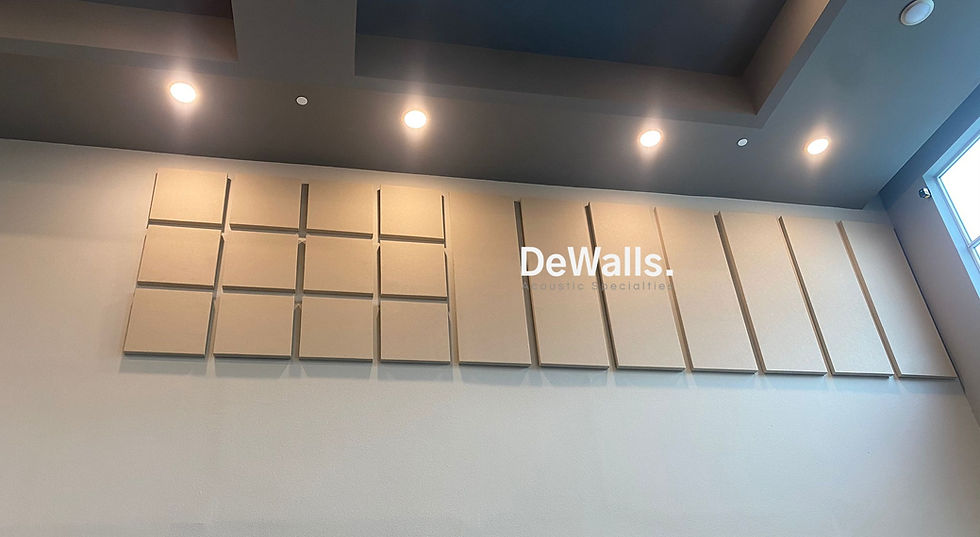
The best acoustic panels for soundproofing in Texas industries combine high NRC-rated materials engineered for extreme climate conditions with industry-specific designs. Here's what works:
Manufacturing and oil & gas facilities: Mineral wool-core acoustic enclosures and 4-inch wall panels deliver the noise reduction needed for OSHA compliance.
Commercial offices: Fabric-wrapped fiberglass hexagon panels with NRC ratings of 0.85-0.90 balance aesthetics with performance.
Healthcare facilities: Anti-microbial PET felt panels withstand rigorous cleaning protocols while maintaining sound absorption.
Churches and large venues: Strategically placed ceiling clouds target long reverberation times most effectively.
The critical factor setting apart effective Texas solutions is climate engineering. Panels must withstand:
Humidity levels are exceeding 80% in Houston.
Temperature swings from below freezing to 115°F in Dallas.
Dust infiltration in West Texas.
All while maintaining Class A fire ratings required by Texas commercial building codes.
When a Houston manufacturing plant faced $75,000 in OSHA violations for exceeding noise exposure limits, the solution wasn't just any acoustic panel. It was a Texas-engineered system designed to withstand Gulf Coast humidity while reducing noise levels from 94 dB to a compliant 76 dB. That's the difference between generic solutions and what actually works in the Lone Star State.
Texas isn't just big. It's diverse in ways that matter for acoustic treatment. The same panel specification that performs beautifully in a climate-controlled Austin tech office will fail spectacularly in a West Texas oil field where summer surface temperatures hit 130°F and dust particles infiltrate everything. This guide cuts through the noise to show you exactly what works, where it works, and why Texas demands a different approach.
Understanding Acoustic Treatment vs. Soundproofing: What Texas Businesses Actually Need
Walk into most Texas facilities with noise problems, and you'll hear the same request: "We need soundproofing." But here's what most business owners don't realize. What they actually need is acoustic treatment, and there's a world of difference.
Acoustic treatment absorbs sound energy within a space. Think of it like carpet absorbing footsteps. When sound waves hit an acoustic panel, they enter the porous material and convert to tiny amounts of heat through friction. This reduces:
Echo
Reverberation
That overwhelming "loud" feeling, even when the actual volume hasn't changed
A restaurant where conversations echo off hard surfaces until you can't hear the person across the table? That's an acoustic treatment problem.
Soundproofing blocks sound from traveling between spaces. It uses mass and isolation to prevent sound transmission. The neighbor's music bleeding through your wall? That's a soundproofing problem requiring different solutions:
Mass-loaded vinyl barriers
Resilient channels
Double-wall construction
Here's where it gets interesting for Texas businesses. Most facilities need both, but in different proportions:
An oil and gas control room might need acoustic panels to prevent echo during critical radio communications, plus soundproofing to block out compressor noise from adjacent equipment.
A Dallas tech office typically needs acoustic treatment for the open workspace and soundproofing only for a few conference rooms requiring privacy.
The Texas Climate Factor Nobody Talks About
Generic acoustic panels are engineered in moderate climates. Think California or the Northeast. They're tested at 72°F with 50% humidity. Now put those same panels in a Houston warehouse where summer humidity stays above 80% for months, or a West Texas facility where daytime temps hit 110°F and winter nights drop below freezing.
What happens? Here's the reality:
Adhesives fail. The bond weakens, and panels separate from walls.
Fabric wraps grow mold. Visible growth appears within months in humid conditions.
Fiberglass cores compress and lose absorption. Performance drops by 30% or more.
Fire-retardant treatments degrade. Safety ratings become unreliable.
Dust infiltrates porous materials. Performance reduction exceeds 30% in some cases.
A manufacturing facility in San Antonio learned this the hard way after installing economy panels that looked great for six months. By month eight, visible mold appeared on fabric faces. By month twelve, panels were sagging from humidity-induced compression. The $15,000 "bargain" installation cost $22,000 to remove and replace with climate-appropriate materials.
Texas demands panels with these essential features:
Sealed edges prevent moisture infiltration.
Adhesive systems rated from -10°F to 130°F.
Fabric treatments resisting mildew.
Cores that maintain density through humidity cycles.
These aren't premium features. They're baseline requirements for longevity.
Key Performance Metrics: Reading the Numbers That Matter
Walk into any acoustic panel discussion, and you'll encounter alphabet soup: NRC, STC, SAA. Here's what actually matters for your Texas facility.
NRC (Noise Reduction Coefficient) measures how much sound a material absorbs, on a scale from 0 to 1.0. A panel with NRC 0.85 absorbs 85% of sound striking it, reflecting back only 15%. Higher is generally better, but not always necessary:
A manufacturing floor might only need 0.70 NRC panels for significant improvement.
A recording studio demands 0.95+ for professional results.
Here's the practical translation:
0.50-0.65 NRC: Budget panels that provide noticeable but limited improvement.
0.70-0.85 NRC: Commercial-grade performance for most Texas applications.
0.85-0.95 NRC: Premium performance for critical spaces.
0.95-1.00 NRC: Maximum absorption for studios and specialized applications.
The catch? NRC is an average of four test frequencies:
250 Hz
500 Hz
1,000 Hz
2,000 Hz
It tells you nothing about bass absorption below 250 Hz. This frequency range is crucial for:
Machinery noise
HVAC rumble
Music applications
This is why acoustic consultations matter. A panel might show NRC 0.85 but perform terribly at the exact frequency range, causing your problems.
STC (Sound Transmission Class) rates how well a barrier blocks sound between spaces. Think walls, doors, barriers. Higher STC means better blocking:
Texas commercial building codes often require a minimum STC 50 between hotel rooms.
STC 45 for office demising walls.
Oil and gas facilities might need STC 30-40 barriers around loud equipment.
Fire Ratings aren't performance metrics. There are code requirements that'll shut down your project if ignored. Class A (or Class 1) means:
Flame spread 0-25
Smoke development 0-450 when tested per ASTM E84
It's required for most Texas commercial ceiling and wall applications. Class B and C panels might be cheap, but they'll fail inspection and put occupants at risk.
Every De-Walls acoustic assessment measures your actual noise issues, then specifies panels targeting your specific frequency problems while meeting Texas code requirements. You get exactly what you need, not generic recommendations from a catalog.
Texas Industry Acoustic Solutions: What Works Where
Oil & Gas Facilities: Extreme Noise in Extreme Conditions
The Challenge:
Compressor stations run 24/7, generating noise levels of 95–110 dB.
Control rooms sit just 50 feet away from noise sources.
OSHA flags exposure above 85 dB for over 90 minutes as dangerous.
Solutions must survive 115°F heat, dust storms, and ice storms simultaneously.
For Machinery Enclosures:
4-inch mineral wool cores with galvanized steel facings.
Modular access panels built in for maintenance crew access.
Class 1 Division 2 ratings are required in classified explosion-risk areas.
For Control Rooms:
2-inch mineral wool wall panels eliminate echo during critical communications.
Acoustic barriers separate loud machinery zones from office and control areas.
Climate-Driven Material Selection:
Coastal Gulf installations require 316 stainless steel hardware to resist salt-air corrosion.
Adhesive systems must withstand constant thermal cycling across seasons.
Fabrics near windows or outdoor exposure need UV protection treatment.
Real Result - Permian Basin Facility:
Control room noise reduced from 92 dB to 71 dB.
Method: Steel enclosures around compressor + 2-inch wall panels + closed-cell dust-resistant facings.
Comprehensive treatment typically delivers an 18–28 dB reduction depending on the strategy.
Manufacturing & Industrial: Meeting OSHA While Maintaining Production
The Challenge:
Texas manufacturing averages 93 dB employee noise exposure.
Spans automotive, aerospace, electronics, and food processing statewide.
Each facility has a unique acoustic signature — generic solutions consistently fail.
Most facilities either already run hearing conservation programs or legally should be.
Solution by Noise Level:
75–85 dB: 2-inch fabric-wrapped fiberglass panels at wall reflection points bring reverberation from 3+ seconds to under 1 second.
85–95 dB: 4-inch mineral wool panels covering 20–30% of surface area handle welding heat without performance loss.
95+ dB: Custom acoustic enclosures around specific machinery, combining mass blocking with absorption and integrated ventilation.
Industry-Specific Requirements:
Food processing plants need FDA-compliant, washable, anti-microbial panels — one Houston plant failed a health inspection using standard fabric panels and switched to wipeable PET felt.
Automotive and aerospace facilities need impact-resistant panels that survive daily forklift traffic.
Chemical processing environments require facings resistant to specific solvents used in cleaning.
The OSHA ROI:
One Dallas aerospace supplier spent $47,000 annually on a mandatory hearing conservation program.
A one-time $89,000 acoustic investment brought exposure below the action level entirely.
Payback achieved in under 2 years, with improved communication and fewer safety incidents as additional benefits.
Commercial Offices: Productivity and Talent Retention
The Challenge:
Austin, Dallas, and Houston offices feature glass walls, polished concrete, and open layouts.
Open-plan "cocktail party effect" pushes ambient noise levels to 70+ dB.
Workers in noisy environments make 66% more errors and experience 40% higher stress levels.
In competitive Texas tech markets, office acoustics became a direct talent retention factor.
Solutions:
Wall panels reduce echo while creating visual interest throughout the space.
Ceiling clouds installed over collaboration zones target the highest-activity areas first.
Desk-mounted privacy panels create distinct acoustic zones within open floor plans.
Custom-printed panels in brand colors function as design features rather than afterthoughts.
For Leased Spaces:
Z-clip mounting systems allow full panel removal without any wall damage.
One Austin startup installed removable panels, solved its noise problem, and relocated to its next office.
Real Result — Dallas Financial Firm:
Reverberation reduced from 2.8 seconds to 0.9 seconds.
Panels doubled as branded art installations during client visits.
Productivity on focus-intensive tasks improved by 17% following installation.
Healthcare: HIPAA Privacy and Patient Recovery
The Challenge:
Texas HIPAA violations carry penalties of up to $50,000 per incident.
U.S. hospitals average 60+ dB — the WHO recommends below 35 dB for patient rooms.
Hard surfaces required for infection control create severe echo and privacy problems.
Patients in quieter rooms require less pain medication, sleep better, and recover faster.
Non-Negotiable Material Requirements:
Anti-microbial treatments on all panel surfaces throughout the facility.
Cleanable facings that withstand hospital-grade disinfectants applied multiple times daily.
Impact-resistant edges designed for high-traffic corridors with constant cart movement.
VOC-free materials are essential for pediatric and neonatal units where air quality is critical.
Solution by Area:
Open Nurse Stations: Ceiling baffles reduce speech intelligibility distance from 25 feet to under 10 feet.
MRI Suites: Non-magnetic fiberglass cores with non-metallic facings and zero metal mounting clips — one Houston imaging center experienced image artifacts from standard metal clips.
Behavioral Health: Tamper-resistant, ligature-resistant, rounded-edge PET felt panels with fully flush mounting systems.
Texas Compliance — FGI Guidelines:
Patient rooms: maximum 0.6 seconds reverberation.
Corridors: maximum 0.8 seconds reverberation.
Operating rooms: maximum 0.5 seconds reverberation.
Real Result — San Antonio Hospital:
Corridor noise reduced from 72 dB to 58 dB.
Patient satisfaction scores increased by 11 points.
Nurse retention improved — staff surveys specifically cited reduced vocal strain.
Educational Facilities: Learning Clarity for Texas Students
The Challenge:
Students need 75%+ syllable clarity to understand lessons effectively.
Untreated classrooms regularly drop 60% speech intelligibility.
Most Texas school buildings built before 2000 fail the ANSI S12.60 acoustic standards.
Teachers experience vocal strain, and students show increased behavioral issues in poor acoustic environments.
Treatment Priority Order:
Cafeterias — reverberation times of 5+ seconds create overwhelming daily chaos.
Gymnasiums — speech announcements become completely unintelligible without treatment.
Music rooms — instrument practice reaches hearing-damaging levels for students and staff.
Classrooms — high impact per room at a lower individual cost.
Classroom Solution:
1–2 inch fabric-wrapped panels at NRC 0.65–0.80 covering 15–20% of wall space.
Ceiling treatment consistently provides the best performance per dollar spent.
Solution by Space:
Cafeterias: Wipeable, water-resistant PET felt baffles mounted high — one Houston school cut lunch noise from 95 dB to 78 dB.
Gymnasiums: Ball-impact-rated panels mounted above typical strike height for durability.
Music Rooms: Custom-tuned panels balancing bass absorption with enough reflection for ensemble performance.
Real Result — Dallas ISD School:
Reverberation reduced from 1.4 seconds to 0.7 seconds using ceiling panels only.
Budget stayed under $5,000 per classroom.
ANSI S12.60 standards met — teachers reported immediate improvement in student comprehension.
Budget Tips:
Apply for Texas Education Agency facility grants covering cafeterias and gyms first.
Summer volunteer installation by teachers significantly reduces labor costs for simple wall panels.
Ceiling and high-altitude work always requires certified professional installation for safety.
Hospitality & Restaurants: Experience Quality Drives Revenue
The Challenge:
Open kitchens, polished concrete floors, and high ceilings create acoustic disasters.
An average noisy restaurant operates at 85–92 dB during peak service.
"Too loud to talk" reviews directly reduce return visits, average check size, and staff retention.
Invisible Treatment Options:
Ceiling baffles painted to match existing finishes blend seamlessly into any design.
Custom-printed panels featuring food photography or local landmark art double as décor.
Lighting fixture-integrated panels serve acoustic and design purposes simultaneously.
Wood-veneer or industrial-look panels match upscale and modern restaurant aesthetics, respectively.
Kitchen & Bar Specific Solutions:
8-foot dishwashing zone barriers deliver 12–15 dB reduction at dining tables.
Localized treatment around espresso and blender stations controls high-frequency noise spikes.
Open kitchen ceiling absorption prevents cooking noise from entering the dining room.
Real Result — Dallas Restaurant:
Noise was reduced from 88 dB to 72 dB after treatment.
Average check increased from $62 to $71 per person.
Table turnover improved by 12 minutes per sitting.
Annual revenue increased $180,000 from a $9,500 acoustic investment.
Installation Process:
Midnight to 6 AM scheduling ensures zero revenue disruption during service hours.
Most restaurant projects are completed across 2–4 nights total.
All materials meet the health department food safety and fire marshal compliance requirements.
Houses of Worship: Speech Intelligibility for Growing Congregations
The Challenge:
Texas megachurches feature 40-foot ceilings, plaster walls, tile floors, and wooden pews.
Reverberation times of 3–6 seconds are common in untreated sanctuaries.
Speech intelligibility drops below 65% — congregants miss more than one-third of spoken words.
Worship teams struggle with excessive bass buildup and overall clarity issues during services.
Most Cost-Effective Solution — Ceiling Clouds:
Suspended at 12–20 feet, clouds intercept sound before it reflects off distant walls.
Achieves better results with significantly less material than full wall coverage.
Placement is determined through acoustic modeling based on speaker position and seating layout.
Wall Panel Strategy:
Panels focused behind the stage and pulpit absorb sound directly at the source.
Just 10–15% total wall coverage consistently solves 80% of the intelligibility problem.
Real Results:
San Antonio church: reverberation dropped from 4.5 seconds to 1.6 seconds after cloud installation.
Fort Worth church: speech intelligibility improved from 58% to 87% following full treatment.
The pastor reported significantly reduced vocal strain after speaking in the treated space.
Budget & Installation Tips:
Phased approach matches capital campaign fundraising timelines — each phase delivers noticeable improvement.
Congregation volunteers can install simple wall-mounted panels under professional guidance.
Ceiling work above 15 feet always requires professional installation due to safety requirements.
Historic buildings require reversible mounting systems that attach without damaging original plaster or woodwork.
Recording Studios & Content Creation: Professional Sound in Texas
The Challenge:
Austin's music scene and Dallas's media boom created demand across all budget levels.
Most Texas residential spaces suffer from flutter echo, bass mode buildup, and HVAC noise penetration.
Garage studios face extreme swings between 110°F summers and 35°F winters.
Treatment Priority Order:
First reflection points on side walls — delivers the highest impact per dollar invested.
Corner bass traps — address room modes that plague small rectangular spaces.
Additional wall and ceiling coverage will be added progressively as the budget allows.
Solution by Studio Type:
Professional Studios: Bass traps + mid-high wall panels + rear wall diffusion + ceiling treatment for accurate mix monitoring.
Home & Project Studios: 4-inch corner panels for bass management paired with 2-inch panels at first reflection points.
Podcast & Video Setups: NRC 0.70–0.80 panels covering 20–30% of wall area eliminate "bathroom reverb" while preserving natural room tone.
Measurable Difference:
An untreated room captures 40% direct sound and 60% room reflections.
Properly treated room captures 80%+ direct sound with minimal room contamination.
Result: Broadcast-quality recordings requiring significantly less EQ and post-processing.
Aesthetic & Practical Integration:
Custom fabric colors and printed logos turn panels into branded video backgrounds.
Freestanding panels on rolling stands serve multi-use spaces — positioned for recording, moved aside for normal use.
Climate-sealed panels and humidity management protect both acoustic performance and recording equipment year-round.
Texas Climate & Material Engineering: Why Location Determines Material Success
Generic acoustic panels are tested at 72°F and 50% humidity — conditions that exist nowhere in Texas for extended periods. Real-world Texas conditions destroy inadequate materials.
Houston & Gulf Coast: The Humidity Challenge
The Challenge:
Coastal Texas exceeds 80% humidity for months annually.
Moisture destroys acoustic materials not engineered for humid environments.
What Happens to Inadequate Materials:
Fiberglass cores without vapor barriers absorb moisture, causing sagging and performance degradation.
Fabric wraps grow mold and mildew with visible staining within 6 to 12 months.
Standard adhesives lose bond strength, causing panels to separate from walls entirely.
Real Result, Galveston Commercial Property:
Humidity caused adhesive failure after just 14 months.
Panels fell from walls, and a complete $18,000 reinstallation was required.
What Works:
PET felt panels made from recycled plastic are inherently moisture-proof, mold-resistant, and performance-stable through humidity cycles.
Mineral wool resists moisture while maintaining acoustic properties as an inorganic material that won't support mold growth.
Sealed-edge construction prevents moisture from entering through panel perimeters, extending panel life by 10 or more years.
Dallas/Fort Worth: Temperature Extremes
The Challenge:
Dallas hit -2°F in February 2021 and 113°F in summer, a 115-degree range that panels must survive.
Standard adhesives are rated to 120°F maximum, while wall surfaces in direct sunlight easily reach 140°F.
Thermal expansion and contraction stress adhesive bonds with every seasonal cycle.
What Works:
Industrial-grade adhesives rated from -10°F to 140°F maintain bond through Texas temperature swings.
Z-clip and impaling clip mechanical systems avoid thermal adhesive issues entirely.
Impact-resistant facings or protective screening protect outdoor and semi-outdoor installations from hail damage.
West Texas & El Paso: Heat, Dust, and UV Exposure
The Challenge:
Relentless sun exposure with minimal humidity degrades fabrics and adhesives rapidly.
Unprotected colored fabrics fade within 18 months under intense West Texas sun.
Dust accumulates inside unsealed panels, reducing acoustic performance over time.
Real Result, Midland Industrial Facility:
30% performance degradation occurred over two years from dust accumulation in unsealed fiberglass panels.
After switching to sealed PET felt panels, performance remained stable with only quarterly vacuuming for 5 or more years.
What Works:
UV-stable fabric treatments prevent fading and material breakdown over time.
Sealed-edge construction blocks dust infiltration through panel perimeters.
Smooth, wipeable PET felt facings allow easy periodic cleaning.
Industrial-grade adhesives maintain integrity above 130°F surface temperatures.
South Texas & Corpus Christi: Coastal Salt Air
The Challenge:
Salt air corrodes standard metal hardware within months of installation.
Elevated humidity and temperature persist nearly year-round, creating constant material stress.
Fabric surfaces require cleaning every 3 to 6 months versus annually for inland installations.
What Works:
316 marine-grade stainless steel hardware delivers a 20-year or more lifespan in coastal conditions.
Salt-resistant fabric treatments prevent corrosive buildup on panel surfaces.
Standard steel clips rust within months, and 304 stainless performs marginally better but still corrodes over time.
Installation Methods for Texas Conditions
Adhesive Installation, Best For Permanent Spaces:
Suitable for owned buildings where removal is unlikely, and a clean aesthetic is a priority.
Requires industrial-grade adhesive rated from -10°F to 140°F for Texas conditions.
Surface must be clean, primed, and fully cured, as freshly painted walls need 30 days minimum before application.
Adhesive must cover 70% or more of the panel back, not just perimeter beads.
It cannot be removed without damaging the panel or wall, so it suits permanent installations only.
Z-Clip and Impaling Clip Systems, Best For Flexible Spaces:
Ideal for spaces anticipating future changes, reconfiguration, or tenant relocation.
Mechanical attachment is unaffected by heat or cold, making it reliable across all Texas conditions.
Panels simply lift off wall clips for maintenance or relocation without causing damage.
Higher upfront cost but eliminates all temperature-related failure risks long term.
Damage-Free Solutions, Best For Leased Spaces:
Command strips handle up to 16 lbs per set and are limited to lightweight 1 to 2-inch panels only.
Unreliable in non-climate-controlled spaces exceeding 100°F as the adhesive softens and panels detach.
Freestanding acoustic partitions require zero installation and are fully portable and relocatable.
Ceiling-hung baffles and clouds suspend from ceiling grids with no wall modification required.
Professional Installation vs. DIY
DIY Works When:
The project covers under 500 sq ft of simple wall-mounted panels on drywall.
Installation height stays below 12 feet in easily accessible areas.
A motivated building owner or facilities staff member is available to complete the work.
Professional Installation Required When:
Work exceeds 12 feet as lifts, fall protection, and OSHA-trained personnel become mandatory.
Industrial environments require confined space protocols and lock-out/tag-out procedures.
Healthcare and education facilities involve code compliance, inspections, and background check requirements.
Integrated systems require acoustic work to be coordinated with electrical, HVAC, or technology installations.
What Professional Installation Includes:
Full site protection covering floors, containing dust, and protecting existing finishes throughout.
Proper safety equipment and full OSHA compliance for all elevated work performed.
Level, evenly spaced panels with consistent appearance and post-installation performance verification.
Complete site cleanup, waste disposal, and a post-installation walkthrough with customer approval.
Texas Safety Requirements:
OSHA 10-hour or 30-hour certification is required, depending on the overall project scope.
Fall protection is mandatory for all work performed above 6 feet.
Confined space certification is needed for specific oil and gas facility applications.
Full liability coverage, workers' compensation, and commercial bonding are required on all projects.
Return on Investment: The Business Case for Acoustic Treatment
Manufacturing & Industrial ROI
OSHA Violation Cost Avoidance:
Serious violations cost $7,000 to $15,000 per incident.
Repeat violations reach up to $70,000.
Willful violations exceed $130,000.
Acoustic treatment eliminating exposure below action levels removes this risk entirely.
Hearing Conservation Program Savings:
Programs cost $300 to $700 per affected employee annually.
A facility with 50 affected employees spends $15,000 to $35,000 every year.
Reducing exposure below 85 dB eliminates the program requirement completely.
Workers' Compensation and Productivity:
Average hearing loss claims exceed $15,000, with serious cases reaching $100,000.
One Houston automotive facility documented 12% error reduction after treatment, saving $47,000 annually in rework costs.
Studies show a 5 to 8% productivity improvement when communication barriers are removed.
Payback Timeline: 1 to 3 years, including compliance savings, safety improvement, and productivity gains.
Office & Commercial ROI
Productivity Improvement:
Cornell University research found 17% higher productivity on cognitive tasks in acoustically treated offices.
For 50 employees at $65,000 average salary, that equals $552,500 in additional annual value.
Employee Retention:
Turnover costs $5,000 to $20,000 per employee, depending on role and market.
Preventing just two departures annually can fully justify the acoustic investment.
Space Utilization:
Effective open-plan acoustics eliminate the need for dedicated quiet rooms and phone booths.
Removing 500 sq ft of quiet space saves $15,000 to $30,000 per year in Austin and Dallas markets.
Payback Timeline: 6 to 18 months in high-turnover environments, 12 to 24 months in stable ones.
Restaurant & Hospitality ROI
Direct Revenue Impact:
Restaurants reducing noise from 85 dB to 72 dB see average check increases of 8 to 12%.
For a $2 million annual revenue restaurant, that equals $160,000 to $240,000 in additional revenue.
A $15,000 acoustic investment pays back in under 2 months at this impact level.
Online Review Impact:
A half-star improvement on Yelp correlates with a 13% revenue increase, according to Harvard Business School research.
Solving noise problems directly eliminates the most common one and two-star review complaints.
Staff Retention:
Server and bartender turnover runs 40 to 60% annually in loud environments.
Comfortable acoustics reduce vocal strain, stress, and resignation rates significantly.
Payback Timeline: 3 to 12 months, often faster for high-volume establishments.
Healthcare ROI
Patient Satisfaction and Reimbursement:
HCAHPS scores are directly tied to Medicare reimbursement rates.
Noise consistently ranks among the lowest-scoring categories in patient surveys.
Improved scores can mean hundreds of thousands of dollars annually for large hospitals.
Length of Stay Impact:
Patients in quieter rooms require 0.5 to 1.0 fewer days for equivalent conditions.
For a 200-bed hospital, a 0.5-day reduction across 70% of patients equals $146,000 in annual savings.
Nurse Retention:
Nurse turnover costs $40,000 to $60,000 per nurse, including temporary staffing and training.
Preventing just two nurse departures annually fully covers most acoustic investments.
HIPAA Compliance:
Violations carry penalties of $100 to $50,000 per incident.
Speech privacy improvements through acoustic treatment substantially reduce this exposure.
Payback Timeline: 12 to 24 months through operational improvements.
Education ROI
Test Score and Funding Impact:
Students in classrooms meeting ANSI S12.60 standards score 4 to 8% higher on comprehension tests.
Improved scores affect school ratings, state funding allocations, and community property values.
Teacher Retention:
Teacher turnover costs $4,000 to $8,000 per departure in recruitment and onboarding.
Vocal strain from reverberant classrooms is a leading cause of teacher departure.
Saving just 3 of 5 at-risk teachers annually saves $12,000 to $24,000 per year.
Behavioral Incident Reduction:
Schools report a 20 to 40% reduction in cafeteria behavioral referrals after acoustic treatment.
Reduced disciplinary incidents free up significant administrator time and resources.
Payback Timeline: 3 to 5 years through teacher retention savings alone.
Texas Building Codes & Compliance
State-Level Requirements
Fire Ratings:
Class A (flame spread 0 to 25) is required for all commercial wall and ceiling finishes.
Panels must be ASTM E84 tested with certified lab documentation.
No valid test report means failed inspections and project delays.
Accessibility:
Assisted listening systems are required in assembly spaces.
Specific acoustic performance standards apply in healthcare and education facilities.
City-Specific Requirements
Houston: Strict fire marshal inspections. Flood zone installations need water-resistant materials or elevated mounting.
Dallas: Acoustic panels with thermal properties receive a favorable plan review. Buildings over 75 feet require enhanced fire protection.
Austin: Panels with recycled content and low VOC contribute to LEED certification. Historic districts require reversible, non-damaging installation methods.
San Antonio: Military facilities face federal acoustic requirements overlaying Texas codes. Historic downtown buildings have additional interior modification restrictions.
Industry Regulations
OSHA: 85 dB triggers hearing conservation programs. Engineering controls must come before hearing protection, and after sound measurements, must be documented.
Healthcare: Patient rooms 0.6 seconds, corridors 0.8 seconds, operating rooms 0.5 seconds, maximum reverberation. Hospital-grade disinfectant-resistant surfaces are required.
Education: New construction must meet ANSI S12.60 standards. Texas Education Agency reviews all state-funded facility plans.
Food Service: Non-porous, cleanable facings required. Panels must not block sprinkler heads or coverage patterns.
Permits and Inspections
Not Required: Projects under 1,000 sq ft with adhesive mounting. Always confirm with the local building department first.
Required For: Larger commercial projects involving fire-rated assemblies or life safety systems.
Inspection Check:
Installation matches approved plans.
Fire ratings are maintained throughout.
Sprinklers, alarms, and egress remain unobstructed.
Certificate of Occupancy: Acoustic compliance verified before legal occupation of new or change-of-use facilities.
De-Walls Support: Full documentation provided, including fire test reports and specification sheets. Direct coordination with Texas building officials on every project.
Maintenance & Longevity: Protecting Your Investment
Material-Specific Maintenance
Fabric-Wrapped Panels:
Vacuum quarterly using a soft brush attachment on low suction.
Blot spills immediately; never rub.
Never saturate with water, as moisture degrades the core and causes mold.
Gulf Coast installations need mildew inspection every 6 months.
West Texas installations need more frequent dusting due to airborne dust.
PET Felt Panels:
Vacuum or lint roll monthly for dust removal.
Safe to damp wipe with mild soap and water.
Avoid harsh solvents or bleach.
Ideal for food service, healthcare, and industrial environments requiring frequent cleaning.
Mineral Wool Panels:
Lowest maintenance option as dense material resists dust accumulation.
Vacuum or use compressed air annually.
Check mounting hardware annually, as heavier weights can loosen fittings over time.
Inspect for chemical or oil contamination in industrial environments.
Texas-Specific Degradation Issues
UV Fading: Affects panels near windows in West Texas and South Texas. UV-stable treatments slow fading, but plan for replacement every 7 to 10 years in high-sun locations.
Humidity Damage: Inspect Gulf Coast installations every 6 months. Mold or adhesive failure often signals a roof leak or HVAC condensation issue requiring repair before panel replacement.
Dust Accumulation: Clean quarterly in West Texas environments. Severely contaminated panels may require full replacement if cleaning cannot restore performance.
Temperature Cycling: Annual inspection in warehouses and semi-outdoor facilities catches adhesive sagging early. Z-clip mechanical mounting avoids this issue entirely.
Warranty Expectations
Standard Coverage:
Quality panels carry 10-year warranties covering material degradation, delamination, and performance loss.
De-Walls provides 10-year warranties on commercial installations, including climate-related issues.
What Voids Warranties:
Improper cleaning methods or harsh chemicals.
Installation not following manufacturer guidelines.
Modification or alteration of panels.
Exposure beyond product specifications.
Expected Lifespan by Application
Climate-Controlled Offices: 20 to 25 years with proper maintenance.
Industrial Facilities: 15 to 20 years, depending on contamination and chemical exposure.
Healthcare Facilities: 15 to 20 years with correct cleaning protocols.
Educational Facilities: 20 or more years when mounted above student contact height.
Recording Studios: 20 or more years in climate-controlled environments.
Outdoor and Semi-Outdoor: 10 to 15 years. Budget for replacement every 10 years in harsh conditions.
De-Walls Maintenance Programs
Annual inspections, cleaning services, and panel replacement when needed.
Available for large commercial installations to ensure ongoing performance and maximum investment longevity.
Why De-Walls for Your Texas Acoustic Project
Texas Expertise You Won't Find Elsewhere
Based in Texas, working in Texas conditions every single day.
Installed panels in 115°F Midland heat, 85% Gulf Coast humidity, and West Texas dust storms.
National suppliers ship generic products built for moderate climates. When they fail in Corpus Christi salt air after 18 months, they are nowhere to be found.
De-Walls engineers solutions specifically for Texas and backs them with warranties covering climate-related issues.
Experience Across Every Major Texas Industry:
Oil and gas facilities in the Permian Basin.
Manufacturing plants in San Antonio.
Tech offices in Austin.
Healthcare facilities in Dallas.
Schools and restaurants statewide, from Houston to El Paso.
Custom Solutions, Not Catalog Sales
Every Assessment Measures:
Sound level readings across multiple locations.
Reverberation time analysis showing how long sound persists.
Frequency analysis identifies which sound ranges cause problems.
Source identification pinpoints exactly where noise originates.
From That Assessment We Design:
Panel types addressing your specific frequency problems.
Quantities delivering your target improvement.
Materials suited to your exact climate conditions.
Installation methods matching your building type and timeline.
Customization Options:
500 or more fabric colors with Pantone matching for brand coordination.
Custom-printed graphics featuring logos, artwork, or photography.
Geometric shapes, including hexagons, circles, clouds, and custom architectural forms.
Panel sizes from 2x2 feet up to 4x10 feet and larger.
3D visualizations are provided before any commitment is made.
Quality Materials and Texas-Tested Performance
Fabric-Wrapped Fiberglass:
Mildew-resistant, UV-stable fabric faces.
Adhesive systems maintain bond from -10°F to 140°F.
PET Felt Panels:
60 to 100% recycled content depending on specification.
Mold and mildew resistant, performance-stable through unlimited humidity cycles.
Easy to clean with mild soap and water.
Mineral Wool Panels:
Maintain density through temperature extremes.
Naturally, Class A fire rated without added chemicals.
Withstand chemical exposure and high temperatures in industrial environments.
All Materials Meet Texas Commercial Building Code:
Class A fire ratings standard on all commercial products.
ASTM E84 test reports are available for building officials.
Low VOC emissions and sustainable recycled content options available.
Installation Excellence Throughout Texas
All Installers Carry:
OSHA 30-hour certification.
Fall protection training and equipment.
Confined space entry certification, where applicable.
Full liability insurance, bonding, and background checks for schools and healthcare.
Scheduling Around Your Operations:
Manufacturing facilities get phased installation during planned downtime.
Restaurants get after-hours crews working midnight to 6 AM.
Schools get summer installation during break periods.
Offices get weekend work, avoiding all business-hour disruption.
Transparent Process and Communication
Every Proposal Includes:
Itemized material specifications with NRC and fire ratings clearly listed.
Project timeline with defined milestones.
Payment terms with no hidden fees.
Performance guarantees with measurable targets.
Full warranty coverage details.
Honest Assessments:
If acoustic treatment will not solve your problem, we will tell you directly.
Sometimes soundproofing or building modifications are needed first.
We help prioritize phased approaches when budgets require it.
We are advisors, not salespeople pushing products you do not need.
Long-Term Partnership
Ongoing acoustic consultation as your needs evolve over time.
Panel additions when spaces are reconfigured or expanded.
Maintenance and cleaning services for large commercial installations.
Multi-location rollout support for growing businesses opening new facilities.
Many clients start with one problem area, prove the ROI, then expand treatment throughout their entire organization.
Your success is our reputation. Texas business communities are closely connected, and we build long-term relationships by standing behind our work and delivering exactly what we promise.
Take the Next Step: Transform Your Texas Acoustic Environment
You've invested time reading this guide, understanding acoustic solutions for Texas industries. Now it's time to address your specific noise challenge.
Why Delay Costs You
Every day without proper acoustic treatment costs your business:
Productivity Losses:
When employees struggle to focus or communicate through noise barriers:
For a 50-person office.
Even 5% productivity degradation.
Equals $125,000 annually in lost output at average Texas wages.
Compliance Risk:
For manufacturing and industrial facilities:
Approaching or exceeding OSHA action levels.
Citations can happen during any inspection.
Penalties start at thousands of dollars.
Employee Turnover:
When people leave uncomfortable work environments:
In tight labor markets like Austin tech or Texas skilled trades.
Replacement costs often exceed $15,000 per employee.
Customer Dissatisfaction:
In restaurants, healthcare, retail, or any customer-facing environment:
Where noise affects experience quality.
Lost customers are lost forever.
Along with everyone they would have referred to.
Health Impacts:
Including:
Stress.
Vocal strain for employees who must speak over noise.
Hearing damage occurs for those exposed to excessive levels without protection.
The Best Time:
To address acoustic problems was before they started.
The Second-Best Time:
It's right now.
Contact De-Walls Today and get Online Scheduling: www.de-walls.com.contact
Your Perfect Acoustic Environment is One Assessment Away
Frequently Asked Questions
Q1. Do acoustic panels actually soundproof a room?
No. Acoustic panels and soundproofing are two completely different solutions:
Acoustic panels absorb sound inside a room to reduce echo and reverberation.
Soundproofing blocks sound from traveling between spaces using dense mass materials.
Most Texas facilities need both:
Acoustic panels to improve interior sound quality.
Sound barriers to stop noise transmission to neighbors or adjacent rooms.
Q2. What is a good NRC rating for acoustic panels?
Look for NRC 0.80 or higher for commercial applications:
NRC 0.80 absorbs 80% of sound hitting the panel.
NRC 0.85 to 0.90 is the commercial standard for offices, gyms, and restaurants.
NRC 0.90 to 0.95 is ideal for industrial facilities and recording studios.
All De-Walls commercial panels range from NRC 0.85 to 0.95, depending on material and thickness.
Q3. How thick should acoustic panels be?
Match panel thickness to your noise problem:
1-inch panels handle high frequencies only — suitable for quiet spaces like yoga studios.
2-inch panels cover speech, music, and moderate impact noise — the standard for most commercial applications.
4-inch panels are essential for bass-heavy environments, including:
CrossFit gyms and weightlifting facilities.
Recording studios and music rooms.
Industrial and manufacturing facilities.
Thicker panels absorb lower frequencies that thinner panels simply cannot reach.
Q4. What is the best material for acoustic panels?
The three top-performing materials are:
Fiberglass — Highest NRC ratings, holds shape without a frame, ideal for offices and studios.
Mineral wool — Handles extreme heat and low frequencies, best for industrial and high-temperature environments.
PET felt — Moisture-proof, mold-resistant, and easy to clean. The best choice for:
Houston and Gulf Coast humid environments.
Food service and healthcare facilities.
Industrial spaces require frequent cleaning.
Q5. How many acoustic panels do I need?
Start with these baseline coverage percentages:
Offices and boutique studios: 15 to 25% of wall surface area.
Restaurants and hospitality: 25 to 35% of wall surface area.
Gyms and fitness facilities: 30 to 50% of wall surface area.
Industrial and manufacturing: 20 to 40% of wall surface area.
Coverage increases based on:
Ceiling height above 12 feet.
Concrete or hard flooring throughout.
Extreme noise sources like dropped weights or heavy machinery.
De-Walls provides free acoustic assessments that calculate exact panel quantities for your specific space.
Q6. Where should acoustic panels be placed for the best results?
Follow this priority order for panel placement:
First reflection points on the side walls where sound bounces before reaching listeners.
Walls are directly behind noise sources such as speakers, equipment, or lifting platforms.
Perpendicular walls that catch secondary reflections.
Ceiling clouds in spaces with ceilings above 12 feet.
Key installation guidelines:
Mount panels between 6 and 10 feet high for optimal coverage.
Avoid installing below 6 feet where equipment contact can cause damage.
Avoid installing above 10 feet, where effectiveness significantly decreases.
Q7. Can I install acoustic panels myself?
DIY installation works when:
The project covers under 500 sq ft of panels.
Walls are standard drywall in easily accessible areas.
Installation height stays below 12 feet.
Professional installation is required when:
Ceiling work exceeds 12 feet, requiring lifts and fall protection.
Industrial facilities with OSHA confined space and safety requirements.
Healthcare and education facilities with code compliance inspections.
Large commercial projects exceeding 2,000 sq ft.
Integrated systems coordinating with electrical or HVAC work.
De-Walls offers assisted DIY programs including panels, hardware, detailed instructions, and phone support.
Q8. Do acoustic panels need a fire rating for commercial buildings in Texas?
Yes. Texas commercial building code requires:
Class A fire rating with flame spread 0 to 25.
ASTM E84 tested by a certified laboratory with documented test reports.
Valid documentation available for building inspectors on request.
Be aware:
Cheap foam panels from online retailers typically fail fire testing.
Panels without valid test reports result in failed inspections and project delays.
A Class A rating is mandatory in offices, schools, healthcare, restaurants, gyms, and houses of worship.
All De-Walls panels carry Class A ratings with full ASTM E84 test documentation.
Q9. How long do acoustic panels last?
Expected lifespan by environment:
Climate-controlled offices: 20 to 25 years.
Healthcare facilities: 15 to 20 years with correct cleaning protocols.
Industrial facilities: 15 to 20 years, depending on contamination levels.
Educational facilities: 20 or more years when mounted above student contact height.
Outdoor and semi-outdoor installations: 10 to 15 years in Texas weather conditions.
Key factors affecting longevity:
Using humidity-proof materials in Houston and the Gulf Coast areas.
Using UV-resistant materials in West Texas and El Paso.
Using 316 marine-grade stainless hardware in coastal South Texas locations.
De-Walls backs all commercial installations with a 10-year climate performance warranty.
Q10. What is the difference between NRC and STC ratings?
These two ratings measure completely different things:
Rating Measures Use Case
NRC Sound absorption inside a room : Reducing echo and reverberation
STC Sound blocking between rooms , Stopping noise transmission to neighbors
Choose based on your problem:
Echo and reverberation inside your space — focus on NRC-rated acoustic panels.
Noise traveling to neighbors or adjacent rooms — focus on STC-rated soundproofing materials.
Both problems present — a combined approach using panels and barriers is required.
Most Texas commercial facilities benefit from both solutions working together.
Have a question not answered here?
Contact De-Walls, and we'll provide the specific information you need for your Texas acoustic project.
Your perfect Texas acoustic environment starts with one conversation.


Comments